Where to Go in 2026: My Picks
My 2026 picks: Uganda, Kenya, Australia and Zambia, plus Guyana and Northern Albania. Places that cap visitor numbers and still feel wild if you plan them well.
Read
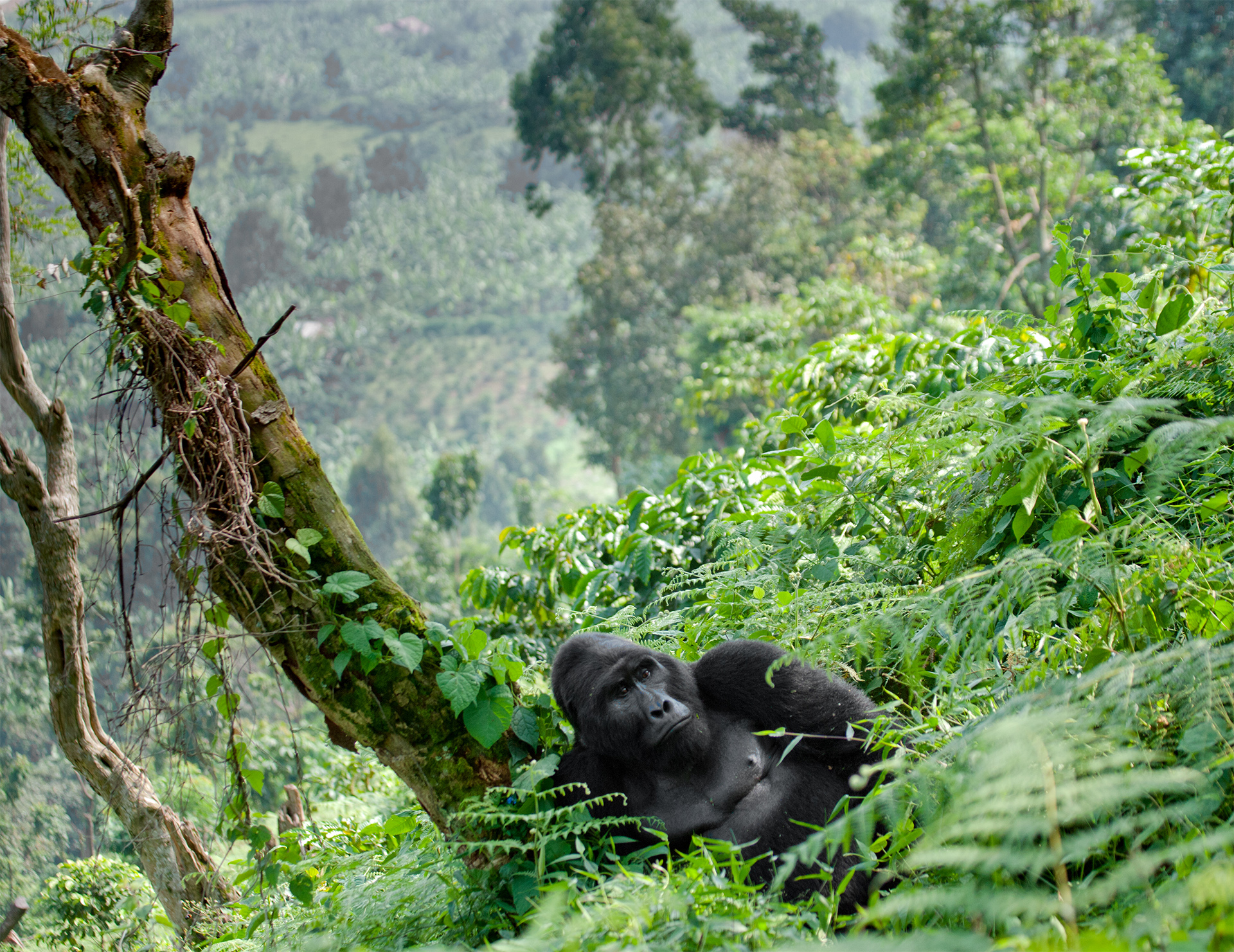
Most people who trek to see gorillas rank it among their best wildlife experiences. Deciding where to do it is harder. Uganda and Rwanda both have mountain gorillas, but they differ a lot in cost, terrain, trekking style, and lodges. Here's how they compare.
The short version: choose Rwanda if you are short on time and want the simplest, most comfortable gorilla trip. Choose Uganda if you want a lower permit price, a wilder forest, and a longer trip that adds chimpanzees and savannah game. The hour with the gorillas is much the same in both countries. What changes is the cost, the terrain, the travel time, and what you do on the other days.
For many travelers, permit price decides it.
Uganda
Permits cost $800 per person per trek, set by the Uganda Wildlife Authority, which makes a real difference for families, photographers, and anyone planning a longer trip. Uganda also has more permits available and more date flexibility.
Uganda also offers the Gorilla Habituation Experience in Bwindi, which gives you up to four hours with a group that is still being habituated, rather than the usual one hour. It costs more than a standard permit, and numbers are very small.
Rwanda
Permits cost $1,500 per person per trek, set by the Rwanda Development Board, in line with Rwanda's focus on high-end, tightly regulated tourism. The operation is polished, with excellent infrastructure and smooth logistics.
Most people trek twice, so for a couple the gap is about $2,800 on permits alone. Both authorities review their fees from time to time, so I confirm the current price when I book. Permits are paid in full at the time of booking.
For value and flexibility, choose Uganda.
For exclusivity and luxury, choose Rwanda.
In both countries, groups are limited to eight visitors per gorilla family, you get one hour with the gorillas once you reach them, and the minimum age is 15. You trek with rangers and trackers, and you can hire a porter to carry your bag and help on the steep parts. I recommend it in both places. My post on what the trekking day is actually like covers fitness and what to wear.
Uganda (Bwindi Impenetrable Forest + Mgahinga)
Bwindi is split into four trekking sectors (Buhoma, Ruhija, Rushaga, and Nkuringo) and has many more habituated gorilla families than Rwanda, which helps with availability. Mgahinga, on the Ugandan side of the Virunga volcanoes, has one habituated family and terrain closer to Rwanda's. Uganda suits travelers who like a challenge and want to feel surrounded by forest.
Rwanda (Volcanoes National Park)
You walk up through farmland to the park wall, then into bamboo and montane forest. Rangers assign groups by fitness, so you can ask for a family that is usually closer. Treks can still be long and muddy, and the altitude is high, but Rwanda suits travelers who want a shorter, less strenuous trek.
Rwanda
Rwanda has some of Africa's most luxurious lodges. Wilderness Bisate Lodge sits in the crater of an extinct volcano and runs a reforestation program. Singita Kwitonda Lodge borders the park, and One&Only Gorilla's Nest is set in a eucalyptus forest near the park headquarters at Kinigi. Service is excellent, the design is polished, and prices reflect both.
Uganda
Uganda mixes luxury with smaller, characterful properties such as Volcanoes Bwindi Lodge at the forest edge in the north, Clouds Mountain Gorilla Lodge high on the ridge in southern Bwindi, Sanctuary Gorilla Forest Camp, and Mount Gahinga Lodge at the foot of the Virungas. They feel personal rather than ultra-polished, and most cost much less than Rwanda's top lodges. I traveled in Uganda in 2023 and was impressed by the quality, comfort, and hospitality at the top lodges.
In Uganda, your lodge needs to match the sector where your permit is, since some sectors of Bwindi are hours apart by road, so the two need to be planned together.
For ultra-luxury, choose Rwanda.
For variety and better pricing, choose Uganda.
Rwanda
Most treks start a 2.5-hour paved drive from Kigali, which makes a quick, high-end gorilla trip easy. A short trip can be four or five nights in total. Many people spend a night in Kigali on arrival, often at Hemingways Retreat Kigali, trek over 2–3 days, then fly on to Kenya or keep exploring Rwanda.
Uganda
From Entebbe, a scheduled light-aircraft flight to an airstrip near Bwindi takes about one and a half to two hours, followed by a drive to your lodge. Another option is to fly into Kigali and drive across the border to southern Bwindi or Mgahinga, which takes several hours. Either way, plan at least one extra day compared with Rwanda. Uganda works better for longer itineraries that cover several parks.
For convenience and speed, Rwanda wins.
For multi-region safaris, Uganda is the better choice.
If you want more variety, Uganda pulls ahead.
Uganda offers:
Rwanda offers:
My post on Rwanda beyond the gorillas covers Rwanda's other parks in more detail.
Uganda feels wild and rugged: dense forest, unpredictable terrain, and closer contact with local communities.
Rwanda feels polished: smooth logistics, high-end lodges, and tightly structured treks.
Choose Uganda for adventure.
Choose Rwanda for ease and understated luxury.
Either country gives you a superb gorilla encounter; budget, trekking comfort, and travel style decide it. Some trips combine both: gorillas in Rwanda and chimpanzees in Uganda, or a cross-border route into southern Bwindi from Kigali. My Uganda and Rwanda itineraries show a typical version of each. I can help with permit availability, lodge selection, logistics, and wildlife add-ons in either one.
Uganda, generally. Bwindi's thick rainforest, steep slopes, and uneven terrain make it more demanding. Rwanda's bamboo forests have clearer paths and shorter treks.
Rwanda, by a wide margin. Permits are $1,500, compared to $800 in Uganda, and Rwanda's luxury lodges tend to cost more.
Uganda. You can add chimpanzee trekking, tree-climbing lions, shoebills, crater lakes, and game drives in one itinerary. Rwanda's main add-ons are golden monkeys, Nyungwe, and Akagera, which are good but less varied.
Yes. Gorilla trekking in both countries is well regulated, ranger-led, and considered very safe.
Moderate fitness is enough for most people. Uganda takes more stamina because of the steep climbs and dense forest; Rwanda is manageable for a wider range of ages and fitness levels. A porter helps in both.
Yes. You must be 15 to trek gorillas in both countries.
Once your group finds a gorilla family, you get up to one hour with them, watching from a safe, regulated distance. It's close in both countries.
Rwanda. Volcanoes National Park is 2.5 hours from Kigali, which suits a 2–4 day gorilla trip.
It depends on what you want to shoot:
Yes. Many travelers trek in Rwanda and then fly to Kenya for safari, or do gorillas and chimps in Uganda followed by a Kenya safari. Both combinations work well.
If you would like help choosing where to trek and securing permits for your dates, tell me about your trip.
Every itinerary begins with a 20-minute planning call. From there, a $250 planning fee, credited in full toward your booked trip and non-refundable if you don’t book. I brief the property before you arrive — that's what the fee funds.
Plan your trip