Kibale Forest National Park

Africa’s Greatest Primate Forest

Ready to Plan Your Journey?

Every intinerary begins with a conversation. Tell us what you're dreaming of, and we'll design a journey tailored entirely to you.

Take the Next Steps

Kibale Forest National Park

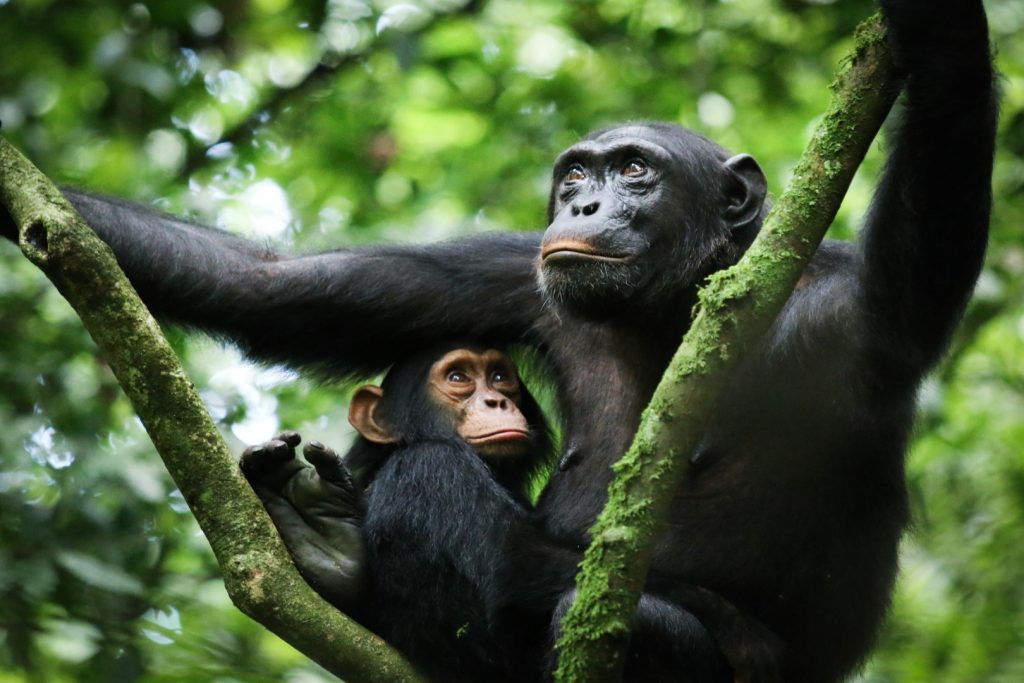
Kibale Forest National Park is Africa’s most important stronghold for wild chimpanzees—not simply because sightings are reliable, but because this is a place where chimpanzee societies, hierarchies, and territories can be observed unfolding in real time.

This is not a quiet forest. Kibale is alive with movement, sound, and social drama. Tracking chimps here feels less like a walk and more like entering an active primate domain.
A Forest Built for Primate Societies

Kibale protects one of East Africa’s largest remaining tracts of lowland tropical rainforest, creating ideal conditions for large, stable chimpanzee communities.

Unlike montane forests, Kibale is:

  • Lower in elevation and warmer
  • Easier to walk for extended periods
  • Structured around layered canopy rather than steep climbs

This allows trackers and researchers to follow chimp groups as they move through feeding trees, patrol territory boundaries, and interact with rival communities.

Chimpanzee Tracking: Power, Politics, and Movement

Chimp tracking in Kibale is dynamic by nature. Encounters often involve:

  • Loud vocalizations and coordinated movement
  • Dominance displays and leadership behavior
  • Feeding, grooming, and social negotiation

Chimps here are rarely still. They move with intent—sometimes quickly, sometimes with purpose—and the experience reflects that.

Kibale offers one of the few places in Africa where travelers can witness chimpanzee society as a functioning political system, shaped by alliances, hierarchy, and competition.

Habituation Experience: Time Inside the System

For travelers seeking deeper understanding, Kibale’s chimpanzee habituation experience provides extended time alongside researchers and trackers.

Rather than focusing on sightings alone, this experience centers on:

  • Behavior and group dynamics
  • Communication and social structure
  • How dominance and lineage shape daily movement

This is not about spectacle. It is about watching a society operate.

Bigodi Wetland: Context and Contrast

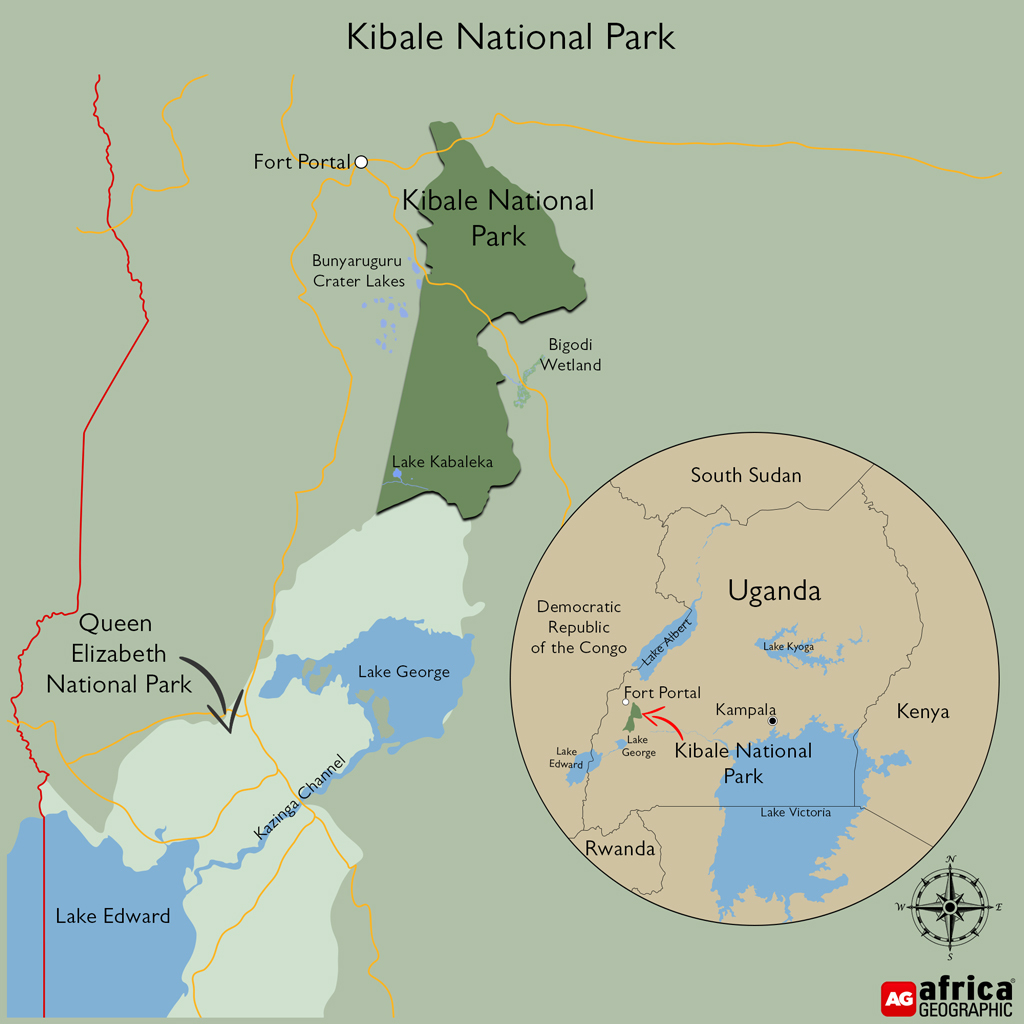
The Bigodi Wetland Sanctuary, just outside the park, offers a gentler counterpoint to Kibale’s intensity.

Here, walks are slower and quieter, with:

  • Birdlife and smaller primates
  • Community-led conservation initiatives
  • Insight into how people and forest ecosystems coexist

We often include Bigodi to give travelers a broader understanding of how human and primate landscapes intersect.

Kibale’s Role in an Uganda Safari

Kibale works best as the primate foundation of an Uganda itinerary. It introduces travelers to:

  • Forest tracking techniques
  • Primate behavior at scale
  • The social complexity that makes later gorilla encounters even more meaningful

Paired with Queen Elizabeth National Park or followed by Bwindi or Mgahinga, Kibale adds intellectual depth before physical intensity.

Where to Stay: Supporting the Rhythm

In Kibale, we prioritize lodges that:

  • Keep access efficient for early tracking
  • Offer quiet spaces to decompress after active mornings
  • Sit close enough to the forest to feel immersed

The right lodge supports reflection—important after days spent inside such an active ecosystem.

The newly opened Kilbae Lodge by Volcanoes is the newest luxury option in the area.

Who Kibale Is Right For

Ideal for:

  • Travelers fascinated by animal behavior
  • Guests interested in primate societies and research
  • First-time Africa travelers seeking depth without extreme exertion
  • Repeat safari travelers wanting something different

Less ideal for:

  • Guests focused primarily on big cats
  • Travelers expecting stillness or predictability
  • Those seeking wide-open landscapes

How We Think About Kibale

We design time in Kibale around movement, patience, and observation. This is not a place to rush through or treat as a checklist.

Kibale rewards travelers who are curious enough to watch a society—not just an animal—at work.

Species in the Area

Mammals

  • Forest elephant (rarely seen)
  • Bushbuck
  • Duiker species
  • Giant forest hog

Primates (one of Africa’s highest primate densities)

  • Chimpanzee
  • Black-and-white colobus monkey
  • Red colobus monkey
  • L’Hoest’s monkey
  • Red-tailed monkey
  • Blue monkey
  • Olive baboon
  • Grey-cheeked mangabey

Birdlife (forest specialists and Albertine Rift species)

  • Green-breasted pitta (rare and highly sought-after)
  • African pitta
  • Black-billed turaco
  • Yellow-spotted nicator
  • African emerald cuckoo
  • Great blue turaco
  • Crowned eagle

Reptiles & Amphibians

  • Chameleon species
  • Forest frogs and toads endemic to western Uganda

Chimpanzee

Kibale National Park protects the highest density of chimpanzees in East Africa, making it one of the most reliable places on the continent to observe complex chimp behavior up close. Large, well-studied communities move through the forest canopy and understory, communicating constantly through calls, gestures, and coordinated group movement. Kibale’s chimps gained wider attention through Chimp Empire, which documented the territorial rivalries, alliances, and social politics that play out here daily. For travelers hoping to experience chimpanzees beyond a fleeting encounter, Kibale offers rare insight into their intelligence, social structure, and power dynamics—when visits are thoughtfully timed and guided.

Ready to Plan Your Journey?

Every intinerary begins with a conversation. Tell us what you're dreaming of, and we'll design a journey tailored entirely to you.

Take the Next Steps

No items found.