Every intinerary begins with a conversation. Tell us what you're dreaming of, and we'll design a journey tailored entirely to you.
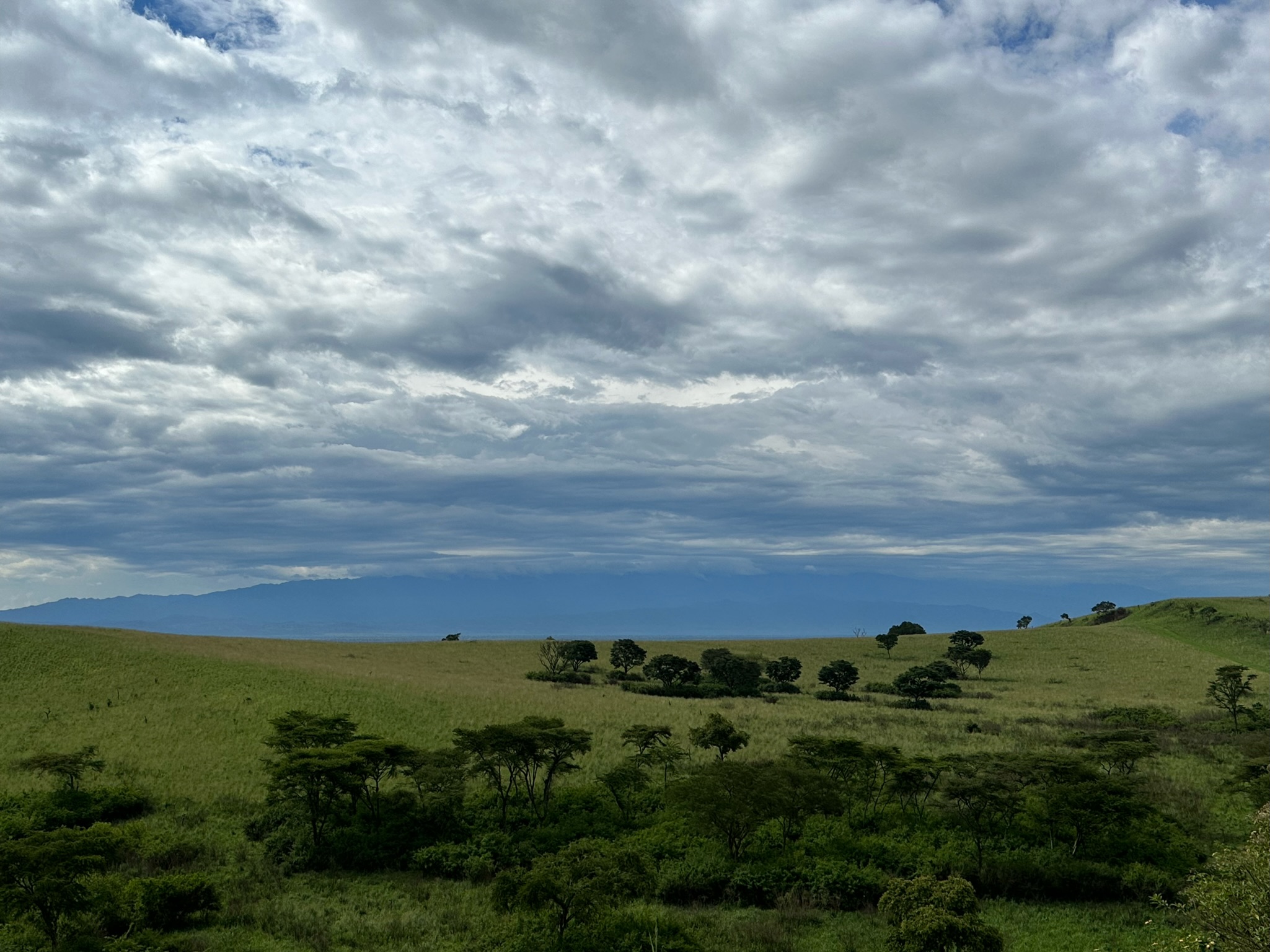
Take the Next StepsQueen Elizabeth National Park is not defined by a single headline experience. It is a living, interconnected system—where savannah, water, forest, wildlife, and human communities overlap in ways few African parks can match.
Done properly, QENP delivers primates, predators, water-based wildlife viewing, and cultural context within a single region—without feeling fragmented.
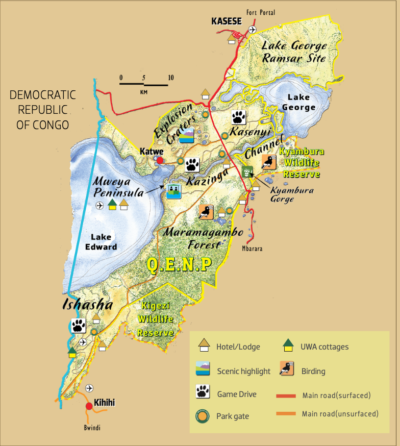
Stretching from Lake George to Lake Edward, Queen Elizabeth National Park is structured around the Kazinga Channel, with ecosystems shifting as you move through it. Wildlife here does not exist in isolation from people—fishing villages, crater lakes, and wildlife corridors coexist in full view.
This interaction is not a flaw. It is the park’s defining characteristic.
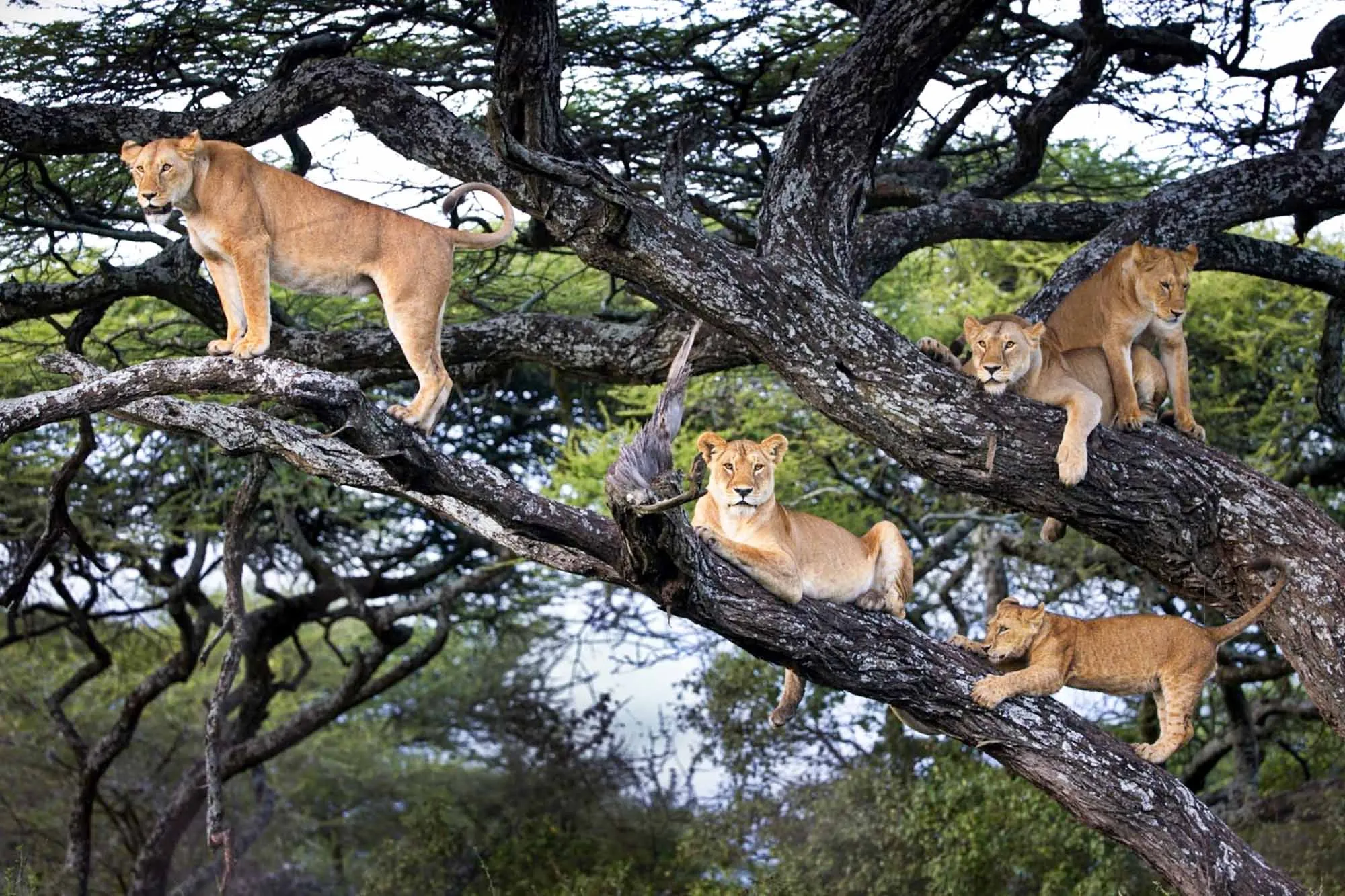
The Kasenyi Plains are Queen Elizabeth National Park’s most open savannah and the park’s best area for traditional game drives. Wide grasslands support large herds of Uganda kob, which in turn sustain a healthy lion population.
Lion sightings here are often strong, particularly in the early morning, when males are active and visibility is at its best. One well-known resident, Jacob, a large dark-maned male, is frequently encountered in this sector and has become a recognizable presence for guides working the area. His behavior—often resting or moving through open grass rather than dense cover—reflects the openness and prey density of the plains.
When timing and availability allow, we can also arrange experiences that intersect with ongoing lion research in the Kasenyi area, offering additional context around pride dynamics, territory, and conservation efforts. These moments don’t change the fundamentals of a game drive, but they do deepen understanding of what you’re seeing on the ground.
Kasenyi works best as a morning safari, paired with the Kazinga Channel later in the day, balancing predator activity with a slower, water-based experience.

The Kazinga Channel is the ecological spine of the park and one of the most reliable wildlife viewing areas in East Africa.
A boat safari here offers:
Unlike game drives, the channel encourages slow observation. We treat it as a grounding experience—one that resets the pace of the safari and deepens understanding of the ecosystem.
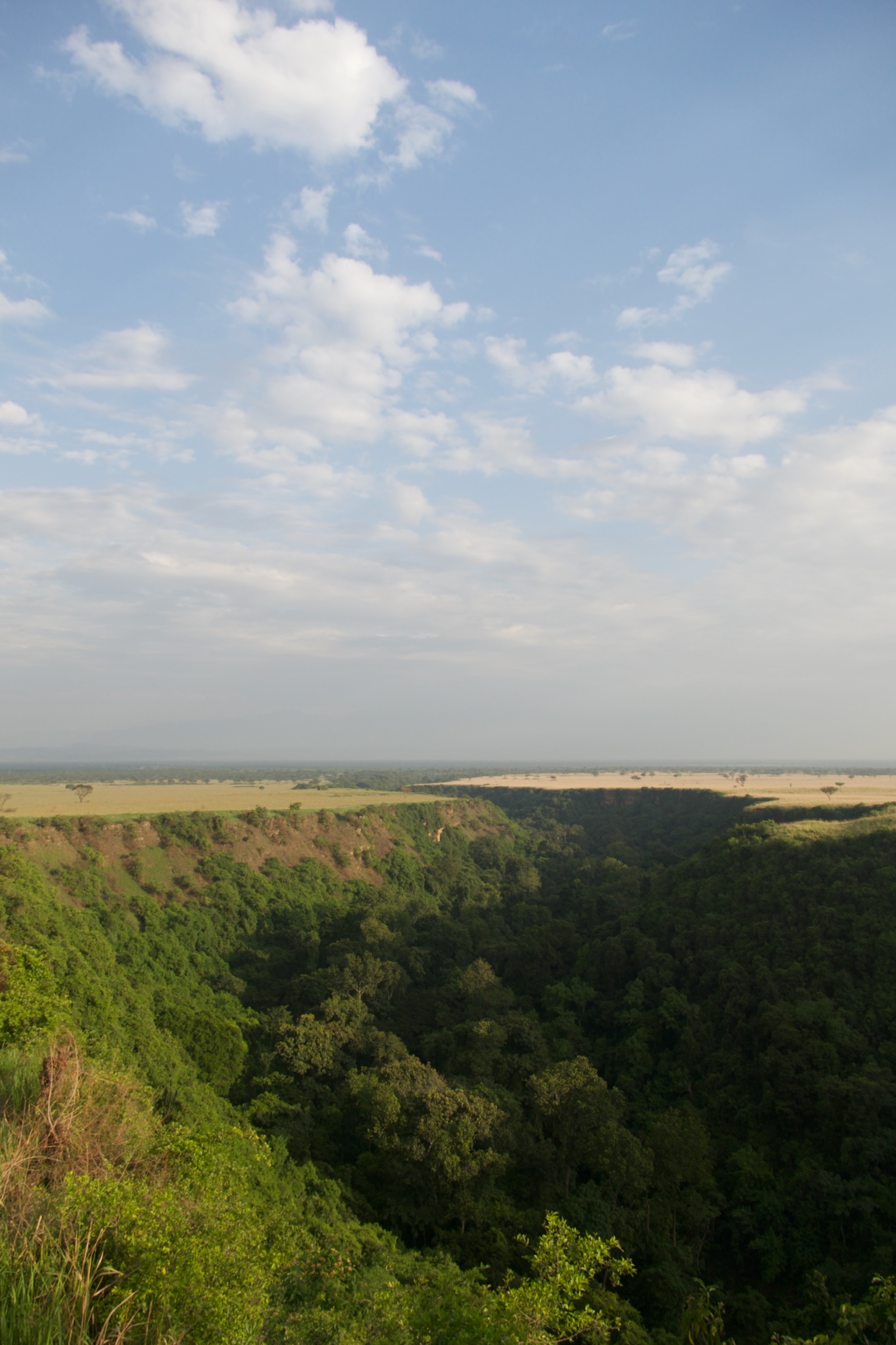
The Kyambura Gorge is one of the most distinctive primate tracking environments in Africa. A steep, forested chasm cut into open savannah, it creates a dramatic contrast between worlds.
Chimp tracking here is:
One unique feature of Kyambura is that the forest goes right up to the savannah floor. At certain times of year the fruits int he valley become sparse and the chimpanzees climb the walls of the valley to feed on fruit tress in the savannah in the Kyambura Reserve. This means that you can see chimpanzees on a game drive. This is an experience unique to Kyambura in the entirety of Africa.
Just outside the park boundary, Kalinzu Forest offers one of Uganda’s most reliable chimp tracking experiences, with:
We often recommend Kalinzu over Kyambura when guests want a more wild experience with less habituated chimpanzees.
Within Queen Elizabeth lies Maragambo Forest, home to one of Uganda’s most unusual ecosystems.
The bat cave supports:
This is an optional experience for curious travelers interested in ecology rather than comfort—a rare look at how predator and prey dynamics shape the park.
The Ishasha sector, along the border with the Democratic Republic of Congo, feels like a different park entirely.
Highlights include:
When time allows, we strongly favor including Ishasha. It transforms Queen Elizabeth from a diverse park into a deep safari experience. Often the Isahasha section is visited when traveling to and from Queen Elizabeth National Park and Bwindi. If you are willing to do the 4-5 hour drive, instead of by bush plane, the Ishasha section is a wonderful add-on.
Queen Elizabeth rewards intentional lodge selection. There are two standout luxury options, each suited to a different style of traveler.
Design-forward, experience-driven
Kyambura Gorge Lodge pairs beautifully with the primate and channel experiences.
For guests focused on Kyambura Gorge, Wild African Safaris’ River Camp, located within the Kyambura Wildlife Reserve, offers one of the most immersive arrivals in Uganda.
Guests arrive by boat, entering the reserve via the water rather than the road—an experience that immediately reframes the stay as something quieter and more intentional.
Why we like it:
This camp suits travelers who value process, place, and immersion over polish.
Queen Elizabeth is not a pristine bubble. Villages, fishing communities, and grazing lands border the park—and wildlife moves through them.
This reality adds meaning. It reinforces the importance of conservation, responsible tourism, and thoughtful travel design in a shared landscape.
We use Queen Elizabeth to:
It is rarely the only highlight—but when designed properly, it becomes one of the most memorable.
Mammals
Primates
Reptiles
Birdlife (one of East Africa’s strongest regions)
Every intinerary begins with a conversation. Tell us what you're dreaming of, and we'll design a journey tailored entirely to you.
Take the Next Steps


.svg)