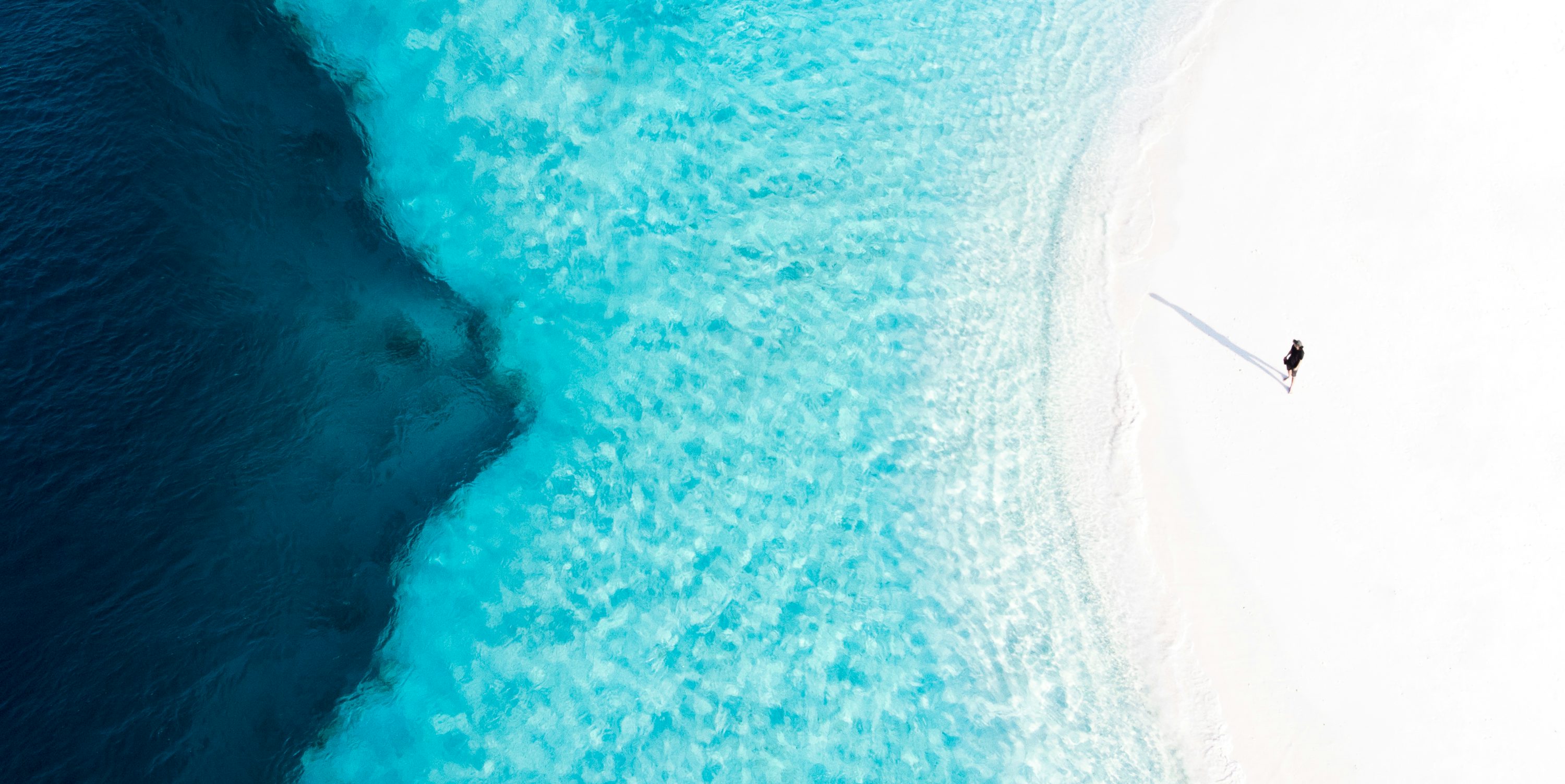
The decompression, done properly. Zanzibar and the Seychelles after a safari, the Greek islands beyond the postcard ports, Australia's reef islands, barefoot-luxury hideaways where nobody is performing for social media. Fewer resort strips; more places with a point of view.
Choosing by photograph
Every resort photographs the same fifteen meters of sand at the same golden hour. The photo doesn't show the resort strip behind you, the beach you can't swim from, or the tide that's out until Thursday.
Ignoring tides and seasons
A beach is a different place in different months. Indian Ocean tides can leave a long walk to the water; Greek islands get the meltemi wind in high summer; some idyllic coasts have a rainy season that isn't a footnote. The right beach in the wrong month is the wrong beach.
Never leaving the property
In places worth visiting, the point of the beach is partly what surrounds it — the village, the spice farm, the harbor town. A trip where the gate is the horizon wastes the destination.
Bolting it on
Two nights after a safari “to relax” is a layover with sand. Decompression takes days to arrive. The beach part of a trip deserves the same seriousness as the safari part.
The first day is for arriving and doing almost nothing — a swim, a long lunch, an early night. The trip gets better from there precisely because nobody is performing productivity.
Mornings tend to be the water's best hours: a boat out to a sandbank, snorkeling before the wind picks up, a walk down the beach while it's still cool. Middays go slow — shade, lunch, a book that's allowed to be mediocre. Then one or two days with a shape to them: a village or market, a spice farm, a harbor town for dinner, a reef trip with a captain who knows where the turtles feed.
And the last day stays empty on purpose. The people who get the beach right are the ones who protect a day with nothing in it.
Zanzibar is where most of my East Africa safaris end, and the pairing is more than convenience — the island gives the trip a second, slower movement after the early mornings of the Serengeti or the Mara.
Four or five nights is the honest minimum. Less than that and you've flown a long way for a nap.
The Seychelles is the Indian Ocean with the volume turned down: granite boulders, jungle down to the sand, and an island for every level of seclusion, including private islands where the guest list is the point.
Best for couples, and for travelers who want the beach to be the whole trip, not the epilogue.
The famous islands earn their fame in May, June and September. In August they earn their crowds. I plan Greece around the slower version: islands and coasts where the tavernas are for the village first and visitors second.
Greece pairs well with Italy in one trip, and it's the beach answer for travelers who get restless on a lounger by day three.
The Amalfi Coast disappoints day-trippers and rewards people who stay. Base in one place, take the boat on the good days, and let the coast be a rhythm rather than a checklist of towns.
September is the month I'd choose. The sea is warm, the light softens, and the August crowds have gone home.
Australia's beach trips are really reef trips: islands in the Whitsundays and off the Queensland coast where the point is what's under the water as much as what's on the sand.
For travelers who find a pure beach week too still, the reef gives the days a subject.
Every itinerary begins with a 20-minute planning call. From there, a $250 planning fee, credited in full toward your booked trip and non-refundable if you don’t book. I brief the property before you arrive — that's what the fee funds.
Plan your trip