Where to Go in 2026: My Picks
My 2026 picks: Uganda, Kenya, Australia and Zambia, plus Guyana and Northern Albania. Places that cap visitor numbers and still feel wild if you plan them well.
Read
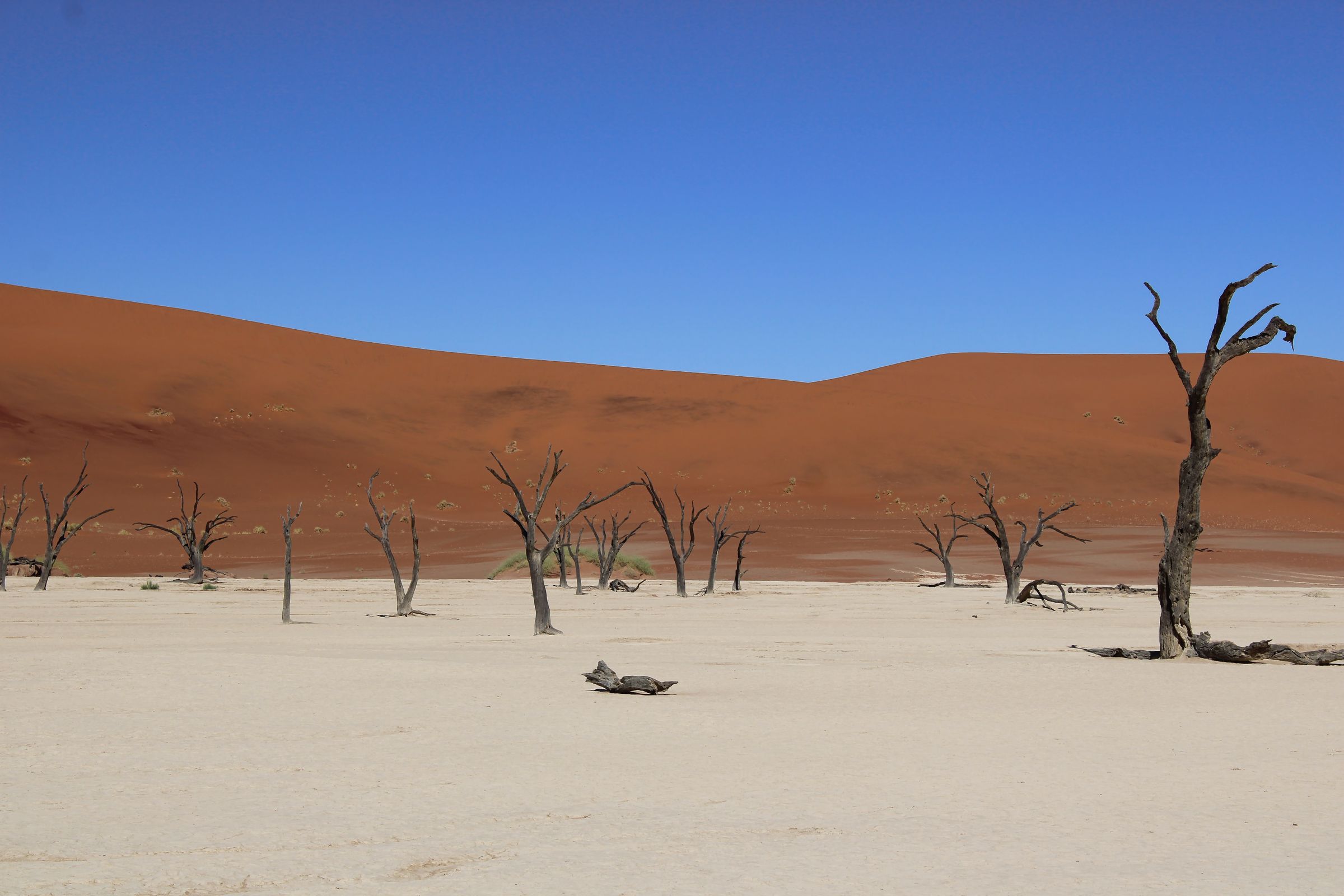
Namibia prices distance. The country is vast and empty, its great sights are a day's drive apart, and the central cost decision of a Namibia trip is how you cover the ground: a fly-in circuit that buys you days, a private guided drive that makes the road part of the trip, or a self-drive that trades money for time. A classic guided build, the dunes, Damaraland or the Skeleton Coast, then Etosha, over ten days or so, runs $11,000–$17,000 per person; a fly-in version of the same route runs higher, $14,000–$21,000 per person, and a self-drive lower, $5,000–$8,500 per person, and each figure buys a genuinely different trip. This page prices the differences honestly rather than pretending they're the same trip at three prices. The one figure that holds across every build is a private game-drive vehicle for your Etosha days, typically $500 to $600 per day.
Every Namibia trip is bespoke and quoted as a range for your dates. Confirm current rates with me.
Namibia's dry winter, May to September, is peak: Etosha's waterholes fill with game, the dunes are comfortable, and the small camps book out. The green months, roughly January to April, soften rates across the board, and the trade-off is specific to this country: Etosha's game disperses as water spreads, while Sossusvlei and the coast are largely unaffected, so a green-season dunes-and-coast trip gives up far less than a green-season Etosha trip. October is the connoisseur's hinge: very hot inland, game at its most concentrated at water, fewer vehicles. My post on the case against peak season explains the thinking.
Namibia's top camps charge for where they are: inside or beside private reserves, the NamibRand beside Sossusvlei, the conservancies of Damaraland and the Kunene, hours from anywhere, with everything, staff, supplies, water, hauled into the desert. The second axis is Etosha. A lodge on a private reserve at the park boundary, with its own waterholes, night access to them and quiet, prices above a lodge positioned for day drives into the park, and the two-camp Etosha strategy I recommend, a boundary reserve plus time inside the park, is a cost decision as much as a viewing one. The new-entrant point: Namibia's camp map is being redrawn by conservancy partnerships, and a new camp on conservancy land with a serious operator behind it is the window.
Three architectures, three trips. Fly-in: scheduled light-aircraft hops between camps, Windhoek to Sossusvlei, on to Damaraland, on to Etosha, each a full day by road and an hour or two by air. On a ten-day trip, flying buys back two or three days in camp, and the flights are a major line item, priced per leg, so camp order is money. Private guided: a vehicle and guide-driver of your own for the whole circuit. The road becomes the experience, the stops, the geology, the small towns, at a day rate across the whole trip. Self-drive: the honest third option. Well-kept gravel roads, little traffic, a 4x4 with two spare tyres, and the trip becomes a driving holiday first and a safari second: your days go to the road, the camps price as bed and board rather than guided product, and Etosha game viewing is your own windscreen. Charter vs scheduled applies inside the fly-in option as everywhere: scheduled hops run the circuit's logic; a private charter bends it to yours. Luggage on the light aircraft is about 20 kg in soft bags.
The light line of the series: national-park entry for the Namib-Naukluft at Sossusvlei and for Etosha, per person per day, and conservancy fees built into private-reserve camp rates. Nobody's Namibia total was ever decided by fees.
On a guided Namibia build, the private vehicle isn't an upgrade line; it's the product. On a fly-in build, camp vehicles are the shared default and the private-vehicle question narrows to Etosha and any private-reserve days, where a private game-drive vehicle typically runs $500 to $600 per day. Worth it there, where waterhole time is the game and a shared vehicle's clock is not yours.
The tiers here are framed by architecture first, fly-in, private guided or self-drive, and then by camp class inside each: the private-reserve camps beside the dunes and in the conservancies at the top, the strong lodges around Etosha and on the coast below. Per-night rates move with the camp and the month, and I quote them for your dates rather than print a table that will be wrong by the time you read it.
Fly the long legs even on a guided trip; one or two hops change the whole shape. Two Etosha camps. Stay inside the Sossusvlei gate or on the adjoining private reserve, because the sunrise is the point and the gate timing decides it.
For May to October, book by January.
Is self-driving actually a luxury option? Yes, if the road is the point and the days are there. What it gives up, stated plainly: guiding, camp-based activities and the interpretation that turns an Etosha waterhole into a story.
Why do fly-in quotes jump between camp orders? Flights are priced per leg and the circuit has a direction. Windhoek to the dunes, to Damaraland, to Etosha is one set of legs; the reverse, or a detour, can be another.
How much do the flights add? Enough to be a major line on a fly-in build, priced per leg. What they buy is two or three days back in camp on a ten-day trip. I quote the exact figure for your routing.
When should I book? By January for May to October.
The desert-and-Delta pairing makes the Botswana cost guide the natural companion to this one, and what drives the cost of a safari sets out the five decisions behind every number here.
Plan this trip with us. $250 planning fee, credited in full toward your trip.
Every itinerary begins with a 20-minute planning call. From there, a $250 planning fee, credited in full toward your booked trip and non-refundable if you don’t book. I brief the property before you arrive — that's what the fee funds.
Plan your trip