
.svg)
Where to Go in 2026: Our Expert Picks
Our 2026 picks: Uganda, Kenya, Australia and Zambia, plus Guyana and Northern Albania. Places that cap visitor numbers and still feel wild if you plan them well.
Read
Most safaris start early and run hard. Game drives at dawn, long afternoons in the vehicle, and a few light-aircraft hops in between. A few nights on a beach at the end gives you time to rest before the long flight home, and it is one of the easiest things to add to a trip to Africa. The question is which beach. The answer depends mostly on where your safari ends, what month you are traveling, and how many nights you have. Here is how we think about it.
Zanzibar is the natural finish to a safari in Tanzania or Kenya. Scheduled light aircraft fly from the Serengeti and Arusha, and there are regular flights from Nairobi, so you can leave a camp in the morning and be on the beach by the afternoon. Stone Town, a UNESCO World Heritage Site, is worth a night or a long afternoon for its old merchant houses, carved doors and markets.
For the beach itself, we usually suggest andBeyond Mnemba Island, a small barefoot lodge on its own island inside a marine conservation area off the northeast coast. You can snorkel the house reef from the beach and see green turtles and dolphins around the atoll. Our Zanzibar page covers the rest of the island.
When: June to October and December to February are the best months, which fits the dry season and the calving season in the Serengeti. April and May are the long rains, and some lodges close.
The Bazaruto Archipelago is a marine national park off the coast of southern Mozambique, with high dunes, seagrass, coral reef and some of the clearest water on the East African coast. It is the best fit after a safari in South Africa. Fly from Johannesburg to Vilanculos, then take a short helicopter or boat transfer to the islands.
Two lodges on Benguerra Island cover most needs. andBeyond Benguerra Island is a relaxed beach lodge with good diving and dhow trips. Kisawa Sanctuary is more private, with bungalows set far apart in the dunes and a marine research center next door. Humpback whales pass from about July to October, and the archipelago has the largest remaining dugong population on this coast, though sightings are never certain.
When: May to November is dry and comfortable. January to March is hot, humid and the main cyclone risk.
The Seychelles are granite and coral islands about three hours by air from Nairobi and four from Johannesburg, with connections through Addis Ababa and the Gulf as well. Mahé is the hub. From there, small planes, helicopters and boats reach the other islands.
There are two kinds of Seychelles stay. The inner granite islands have the famous boulder beaches and green hills: Six Senses Zil Pasyon on Félicité is a good base for La Digue and Praslin, and North Island is a private island with 11 villas and a long rewilding program. The outer coral islands are flat, remote and built for the water: Four Seasons Resort Seychelles at Desroches Island is about 35 minutes by plane from Mahé and works well for families and divers.
When: good all year. The calmest seas are usually in April, May, October and November, between the two trade-wind seasons. From about June to September the southeast trades make some beaches rougher, so the side of the island matters.
Mauritius is about four hours from Johannesburg, which makes it an easy add-on to South Africa or Botswana. It is a larger island with a reef-protected lagoon around most of the coast, mountains and forest inland, and a wide choice of resorts, so it suits families and groups.
One&Only Le Saint Géran sits on its own peninsula on the east coast and has a strong kids' club. The Oberoi Beach Resort, Mauritius is quieter, on the sheltered northwest coast facing the sunset. In the southern winter, from about June to August, the east coast is windier and the west coast calmer, which is worth knowing when you choose.
When: April to June and September to December are best. January to March is hot and humid, with the main risk of cyclones.
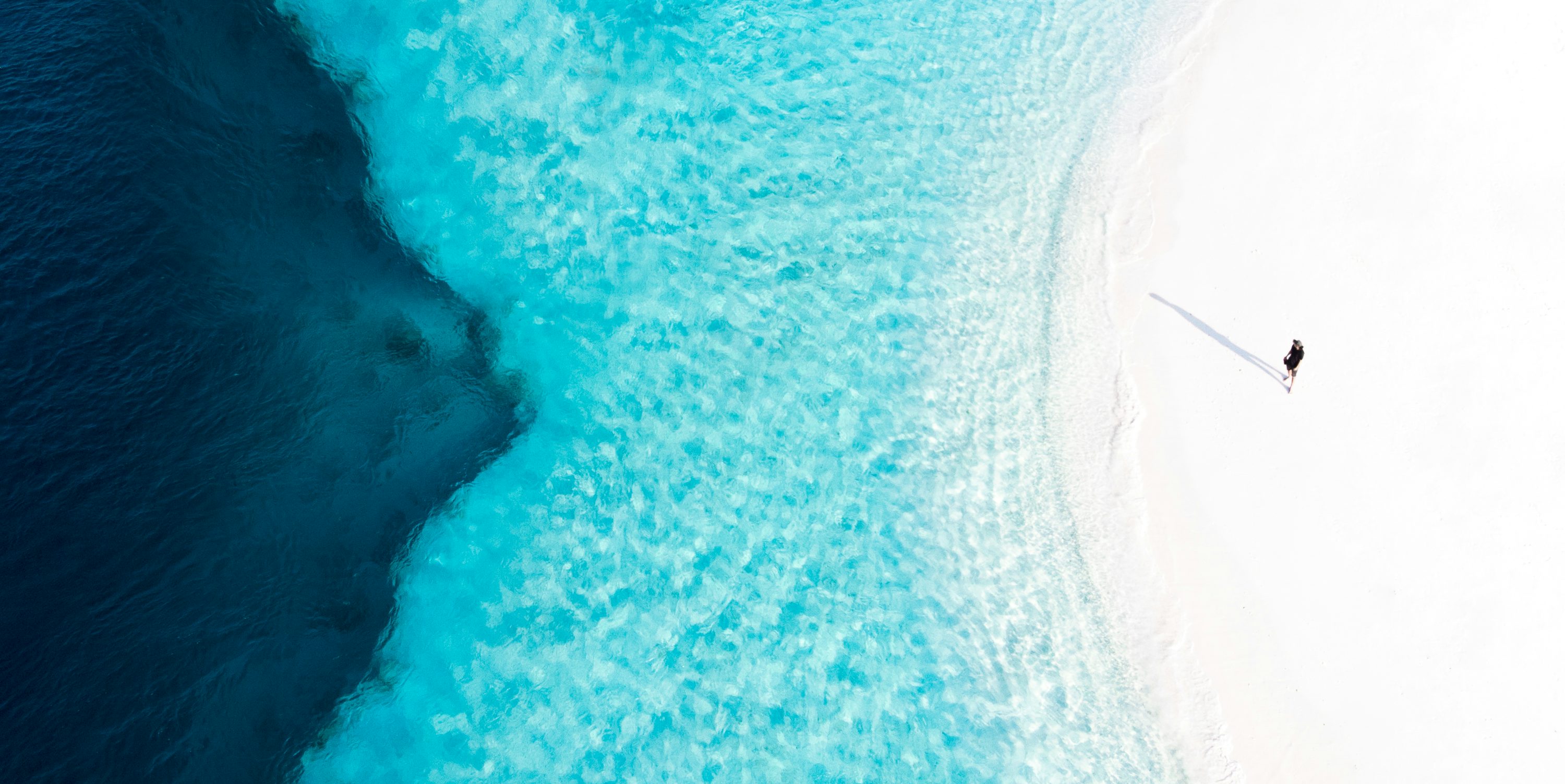
The Maldives is the farthest of the five from Africa. There are few direct flights, so most people connect through Dubai, Doha or Abu Dhabi, and then take a seaplane or boat to the resort. Seaplanes fly in daylight only, so a late arrival can mean a night near Malé. In return you get the clearest water and the best house reefs of any option here.
Soneva Fushi in Baa Atoll is relaxed and good for families. Cheval Blanc Randheli is polished and formal. JOALI Maldives is built around art and a strong house reef.
When: December to April is the dry season. That lines up well with a safari in Tanzania or Kenya from January to March, or a green-season trip to Botswana or South Africa. From May to November the Maldives is wetter, though manta season in Baa Atoll falls in those months.
We usually suggest four or five nights on Zanzibar or in the Bazaruto Archipelago, which are short hops from the bush. For the Seychelles, Mauritius or the Maldives, five to seven nights makes the extra flying worthwhile. Fewer than three nights anywhere tends to feel like transit. If you have a very long flight home, a final night near the international airport is often wise.
Our month-by-month guide to safari weather covers the bush side of the trip, and our post on choosing between the Seychelles, Mauritius and the Maldives goes deeper on the three farther islands. The full list of hotels is on our Beach & Islands page.
If you would like help adding a few beach nights to your safari, tell us about your trip.
Every itinerary begins with a conversation. Tell us what you have in mind, and we’ll plan a trip around you.
Plan your trip


.svg)