• First safari, classic picture in your head, budget that needs range? Kenya. • Second safari, or the water-and-desert trip, or exclusivity above all? Botswana. • Everything below is why.
Two of the most popular safari destinations on Earth, and genuinely different trips wearing the same label. People ask us to pick a winner. There isn't one — there's a match. Here's how the choice actually works, the way we'd talk you through it on a call.
Kenya is far cheaper than Botswana, and more flexible about it. Kenya has real options across price points — you can build a strong Mara trip at several levels and the quality holds up. Botswana has a floor. Especially in the Okavango, the remoteness of the camps means there is a general price you almost can't drop below: everything and everyone arrives by small plane, and the concessions keep bed numbers tiny on purpose.
To get to the Maasai Mara you can drive, fly, helicopter — hitchhike, probably. To get to the Okavango Delta you fly in. That is the entire list, and it's most of the price story.
Kenya is the safari of the imagination, delivered: wide open savanna, high predator density, animals that are comparatively easy to track across open ground. It's why we call Kenya the better first safari — you will see the postcard, plus more than the postcard.
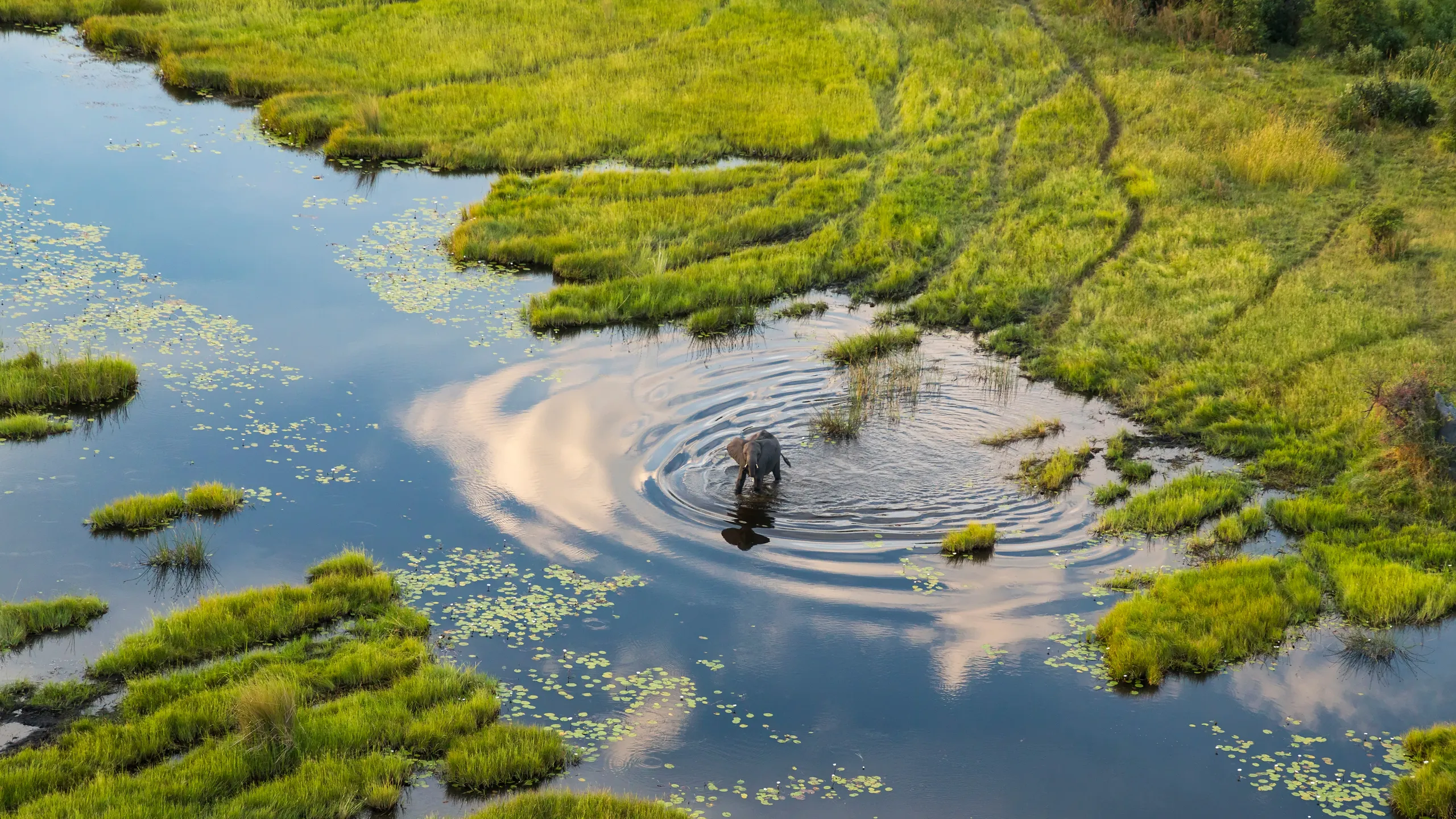
Botswana is three trips in one country, and none of them is the postcard. Chobe gives you the traditional game country (with Africa's biggest elephant herds along the river). The Okavango gives you water — mokoro canoes, boats, island walks — where the game viewing is a search, not a parade, and better for it. And the Makgadikgadi pans and the Kalahari give you desert: silence, meerkats, skies the size of the world. You work a little harder for the animals in Botswana. The travelers who love it wouldn't trade that for anything.
Kenya is easy: one stop from the US to Nairobi, a short hop (or the drive) to the Mara, and you're on safari. Botswana asks more — longer routing in, then light-aircraft transfers between camps, with luggage limits — Kenya's bush flights have them too — and schedules that become part of the trip's rhythm. Neither is a reason to choose or refuse; one is simply easier, and on a first trip, easy compounds.
If the Great Migration is the dream, this section decides it alone: the herds — and the river crossings, July to October — are a Kenya (Mara) / Tanzania (Serengeti) story. Botswana has no Great Migration; what it has instead is the zebra migration in the pans (a wet-season event almost nobody outside safari knows about) and year-round resident game that doesn't depend on herds passing through.
Botswana's model is low volume at high price — private concessions, very few vehicles at a sighting, sometimes none. Kenya's best version of the same idea is its private conservancies around the Mara (night drives, off-road, limited beds — a genuinely different experience from the national reserve). In the main reserve in peak season, you will share sightings. In a conservancy, mostly not. Which Kenya you're buying matters as much as Kenya vs Botswana.
Pick Kenya if: it's your first safari; the migration or big cats headline the dream; the budget needs a range, not a floor; you're bringing the family and want logistics that forgive.
Pick Botswana if: you've been on safari and want the stranger, wilder version; water-based safari sounds like magic; privacy and scarcity are what luxury means to you; the budget stretches to the floor price and past it.
Kenya peaks June–October (dry, migration July–October), with a green, emptier, cheaper January–March we'd defend for the right traveler. Botswana peaks May–October as the flood fills the Delta (the water arrives months after the rain that made it — the Okavango runs on Angola's schedule). Both timelines are on the 2027–28 Safari Availability Calendar — check it before you fall for dates the camps can't honor.
The classic connoisseur's sequence is Kenya first, Botswana second — and about half our job is telling people which order their dreams go in.
It starts with a 20-minute planning call. From there, a $250 planning fee, credited in full toward your booked trip and non-refundable if you don’t book. I brief the property before you arrive — that's what the fee funds.
Plan your trip

