
.svg)
Where to Go in 2026: Our Expert Picks
Our 2026 picks: Uganda, Kenya, Australia and Zambia, plus Guyana and Northern Albania. Places that cap visitor numbers and still feel wild if you plan them well.
Discover
Most safaris happen from the seat of a vehicle. Mana Pools, on the Zambezi in northern Zimbabwe, is one of the few places where a large part of the trip happens on foot or in a canoe, with elephants close by and a qualified guide beside you. Here is what makes it different, when to go, where to stay and what to pair it with.
Mana Pools National Park covers about 2,196 km² of the middle Zambezi valley. Together with the neighboring Sapi and Chewore Safari Areas, it has been a UNESCO World Heritage Site since 1984. The name comes from the Shona word for four, after the four large pools left behind by old channels of the river. Across the water is Zambia's Lower Zambezi National Park, and the escarpment on the Zambian side forms the backdrop to almost every view.
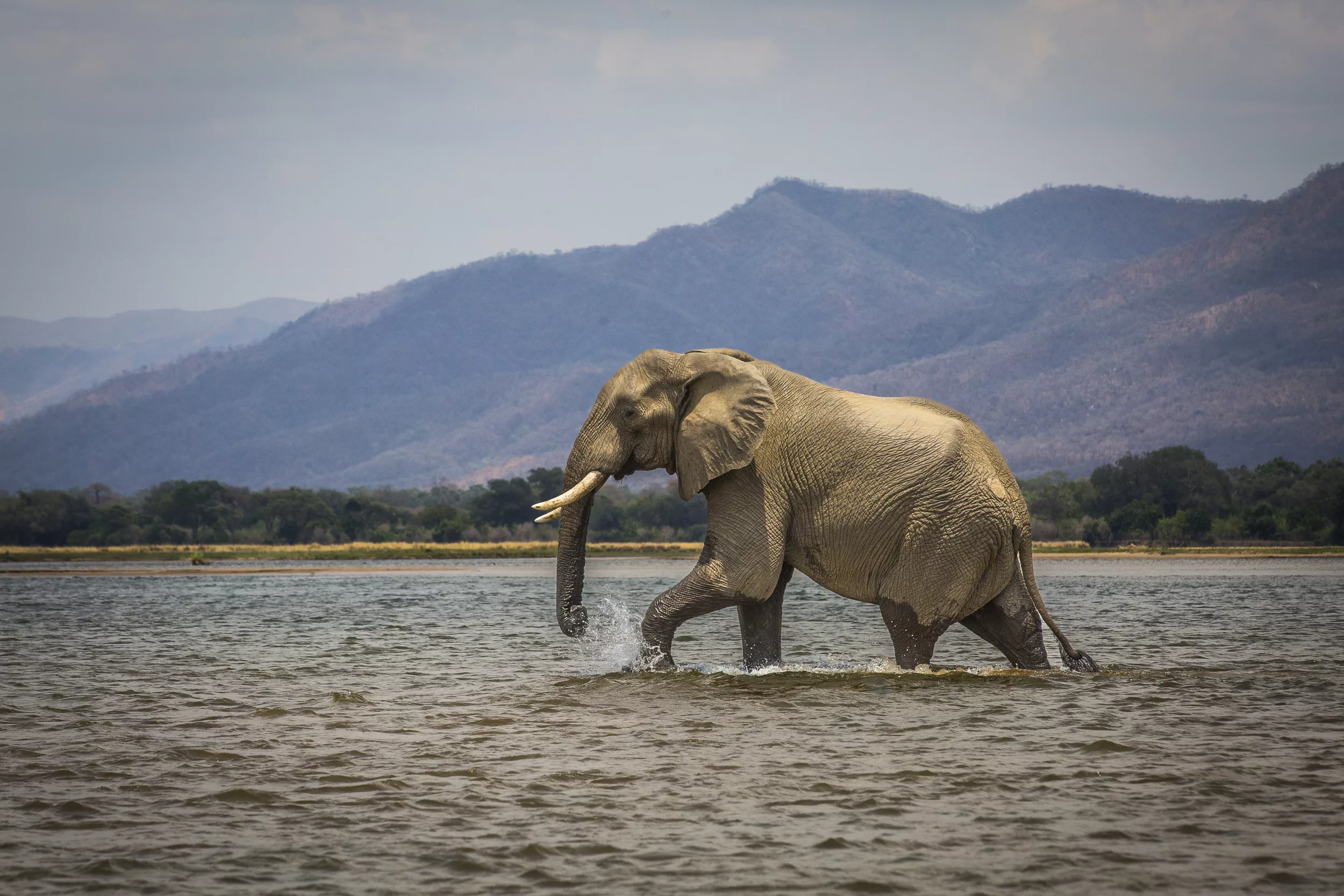
The heart of the park is the band of old river terraces between the Zambezi and the woodland behind it. Tall albida trees shade the ground, and the open floor beneath them looks almost like parkland. As the inland pans dry out through the dry season, elephant, buffalo, zebra, eland and waterbuck move down to the floodplain. Elephants feed on the albida pods, and some bulls stand on their hind legs to reach the branches. Lion, leopard and spotted hyena live here, and Mana Pools is one of the better places in the region to see African wild dogs. Over 450 bird species have been recorded in the World Heritage area.
Walking is the reason many people come. The floodplain is open, and guided walks let you approach elephants on foot at a pace they accept. Zimbabwe's professional guiding qualification takes years of study, apprenticeship and demanding practical exams, so the guides who lead walks here know animal behavior very well.
Mana Pools used to be one of the few parks in Africa where visitors could walk without a guide. In 2015 the parks authority banned unguided walking, and walkers must now go out with a ranger or a professional guide. At Nyamatusi and Kanga, walks are for guests aged 16 and up, so check the age rules for any camp if you are traveling with teenagers.
The other way to see Mana Pools up close is from a canoe. Trips on the Zambezi and its side channels range from half a day to a full day, and some operators run longer trails with nights camped on the riverbank. You paddle with a guide, usually with the current, past hippos and crocodiles, elephants feeding at the water's edge and, in season, carmine bee-eaters and African skimmers. You sit low and quiet on the water, a very different view of animals you may have walked past that morning.
Canoeing runs from the river camps, not the inland ones, so if it matters to you, plan at least part of your stay on the Zambezi. At Nyamatusi, canoe trips are also limited to guests aged 16 and over.
Mana Pools is a dry-season park. The valley floor is black cotton soil, which turns to deep, sticky mud in the rains, so most camps open from about April to November and close for the wet months. Early storms in November can close airstrips. Nyamatusi has been an exception and stays open later than most, so check current dates if you are looking at the edges of the season.
Within that window, wildlife viewing is usually best from August to October, when the floodplain is the main source of water and food and the bush has thinned out. April and May are greener and quieter, with good birding and lower rates. October and November are very hot, and afternoons can pass 40°C. After heavy rains in early 2026, the parks authority warned in April that most road routes into Mana Pools were impassable, while the fly-in Wilderness camps were unaffected.
Camps sit inside the park or in private areas on its edges. River camps are best for canoeing and the albida floodplain, and inland camps trade the river for privacy and a waterhole of their own.
An inland camp and a river camp make a good pair. Kanga and Nyamatusi are both run by African Bush Camps, and the transfer between them is a game drive across the park.
Plan at least three nights. Four gives you time to walk, canoe and still rest through the midday heat, and splits well as two nights inland and two on the river. With one camp, choose a river camp that offers both walking and canoeing, such as Nyamatusi or Ruckomechi.
Almost everyone flies in. Light aircraft land on dirt airstrips in and around the park, and a game-drive transfer takes you on to camp. From Victoria Falls the flight to Mana Main airstrip takes about two and a half hours, from Harare about an hour and a half, and from Bumi Hills on Lake Kariba about 30 minutes. Flights from Hwange take roughly one and a half to two and a half hours, depending on the aircraft, the airstrips and any stops on the way. Luggage limits are strict, typically around 15 kg in a soft bag, and the exact allowance depends on the operator.
The most common pairing is with Hwange National Park. Hwange is drier country, with big elephant herds at pumped waterholes and camps such as Somalisa Camp and Wilderness Linkwasha. Mana Pools then adds the river, the walking and the canoeing. Add a couple of nights at Victoria Falls and you have the classic Zimbabwe safari. Our post on Hwange and Victoria Falls covers that half of the trip, and our Zimbabwe itinerary puts all three together over ten days.
The other natural partner is Zambia's Lower Zambezi, directly across the river. It offers a similar mix of canoeing, walking and drives, and its camps are usually reached by light aircraft from Lusaka. Going from one bank to the other means crossing an international border, so plan on a full transfer day. For a slower stop on the water, Bumi Hills Safari Lodge on Lake Kariba is a short flight from Mana Pools.
If you would like help choosing camps and dates for Mana Pools, get in touch.
Every itinerary begins with a conversation. Tell us what you have in mind, and we’ll plan a trip around you.
Plan Your Trip


.svg)