
.svg)
Where to Go in 2026: Our Expert Picks
Our 2026 picks: Uganda, Kenya, Australia and Zambia, plus Guyana and Northern Albania. Places that cap visitor numbers and still feel wild if you plan them well.
Discover
A safari in Botswana runs differently from most of East Africa. There are almost no roads between the best camps, so you fly between them in small planes, with strict luggage rules. Camps are small and spread far apart, and prices are high by design. None of this is complicated once you know how it works. Here is what to expect, how many camps to include, what to add, when to go and how far ahead to book.
Most trips start in Maun, the gateway to the Okavango Delta, or Kasane, near the Chobe River. Both have scheduled flights from Johannesburg, and Maun also has flights from Cape Town. From there, small charter airlines fly you to each camp's airstrip, usually in single-engine planes carrying a handful of passengers.
Flights between camps are short, often well under an hour, and they are part of the experience: from a few hundred meters up you can see the channels, the islands and the elephant paths through the floodplains. Planes are shared, so a flight may stop at another camp's airstrip on the way. Your guide meets you at the airstrip, and the drive or boat ride to camp is often a game drive in itself.
A few practical points:
The luggage limit on these flights is usually 20 kg per person, and that includes your hand luggage and camera gear. Bags must be soft-sided so they can be squeezed into the small luggage pods. Airlines set maximum dimensions, roughly 25 to 30 cm wide, 30 to 35 cm high and 62 to 70 cm long depending on the operator. Wheels are generally fine as long as the bag has no rigid frame.
Some operators do not accept hard cases at all. Twenty kilos sounds tight, but most camps include a laundry service, and you need far less than you think. A neutral-colored duffel with soft sides is all you need. If you are carrying heavy camera equipment, ask us about options before you travel, since excess baggage needs to be arranged in advance.
If you are combining Botswana with a city stay or a beach, we can often arrange for extra luggage to be stored and collected on the way out.
Three nights per camp is the right rhythm for most people. It gives you five or six activities in each place, time for your guide to learn what you want to see, and room for a slow afternoon. Two nights is possible but rushed, especially when one of the days is a transfer.
A good shape for a first trip:
More than four camps on one trip usually means too many transfer days.
The Chobe riverfront is known for elephants, which come down to the water in very large numbers in the dry season. Game drives and boat trips on the river make a strong contrast with the Delta. Chobe Game Lodge is the only permanent lodge on the riverbank inside the park, and it is about 30 minutes by road from Kasane airport. The riverfront is one of the busiest parts of any Botswana park, so expect other vehicles and boats at sightings.
The Linyanti and Selinda concessions, between the Delta and Chobe, are private areas with large elephant herds in the dry season and good chances of wild dog. They are a good third camp for repeat visitors.
The Makgadikgadi Pans are a complete change: salt pans and grassland on the edge of the Kalahari. In the rainy season, roughly December to March, zebra and wildebeest move onto the grasslands from the Delta region. In the dry months you can ride quad bikes onto the salt flats and sleep out under the stars. Jack's Camp is the classic base here, with habituated meerkats and walks with Zu/'hoasi Bushman guides. It is not a big-game destination, so pair it with the Delta rather than replacing it.
From Kasane, Victoria Falls is a short road transfer, crossing the Kazungula Bridge into Zambia or driving into Zimbabwe. One or two nights is enough to see the Falls and take a sunset cruise on the Zambezi. Our guide to Victoria Falls in high and low water explains how the Falls change through the year.
The dry season, roughly June to October, is the peak. The Delta flood is high, wildlife gathers around permanent water, and the bush is thin, so animals are easier to see. It is also when rates are highest and the best camps fill first. October can be very hot.
The green season, roughly November to March, brings afternoon storms, green landscapes, newborn antelope and migrant birds. Rates are lower and camps are easier to get into. Wildlife is more spread out, and Delta water levels are low before the new flood arrives, so mokoro trips may be limited at some camps. April and May are shoulder months with good value and the flood starting to arrive.
Botswana has followed a deliberate low-volume, high-value tourism policy for decades. Much of the Delta and the surrounding wilderness is divided into large private or community concessions, leased to safari operators or community trusts for exclusive use. The result is a few small camps spread across very large areas, with few vehicles at sightings and long stretches where you see no one else.
That model is expensive to run. Camps are remote, almost everything arrives by air or long supply roads, and the government charges concession fees and levies. Rates at the best camps are among the highest in Africa, and that cost is the price of the space and quiet you get in return. At most camps the nightly rate covers meals, most drinks, activities and laundry, which makes the numbers easier to compare.
The best camps have only a handful of rooms, so they fill early. For the dry season, especially July to September, we suggest booking 12 to 18 months ahead, and longer for the most sought-after camps or for family groups who need several rooms. Mombo in particular is often full months in advance. For the green season, six to nine months is usually enough. Flights between camps are booked at the same time as the camps, so the routing is fixed once the lodges are confirmed.
Our Botswana itinerary shows how a water camp, a land camp, the Chobe River and Victoria Falls fit together.
If you would like help planning a Botswana safari, get in touch.
Every itinerary begins with a conversation. Tell us what you're dreaming of, and we'll design a journey tailored entirely to you.
Plan Your Trip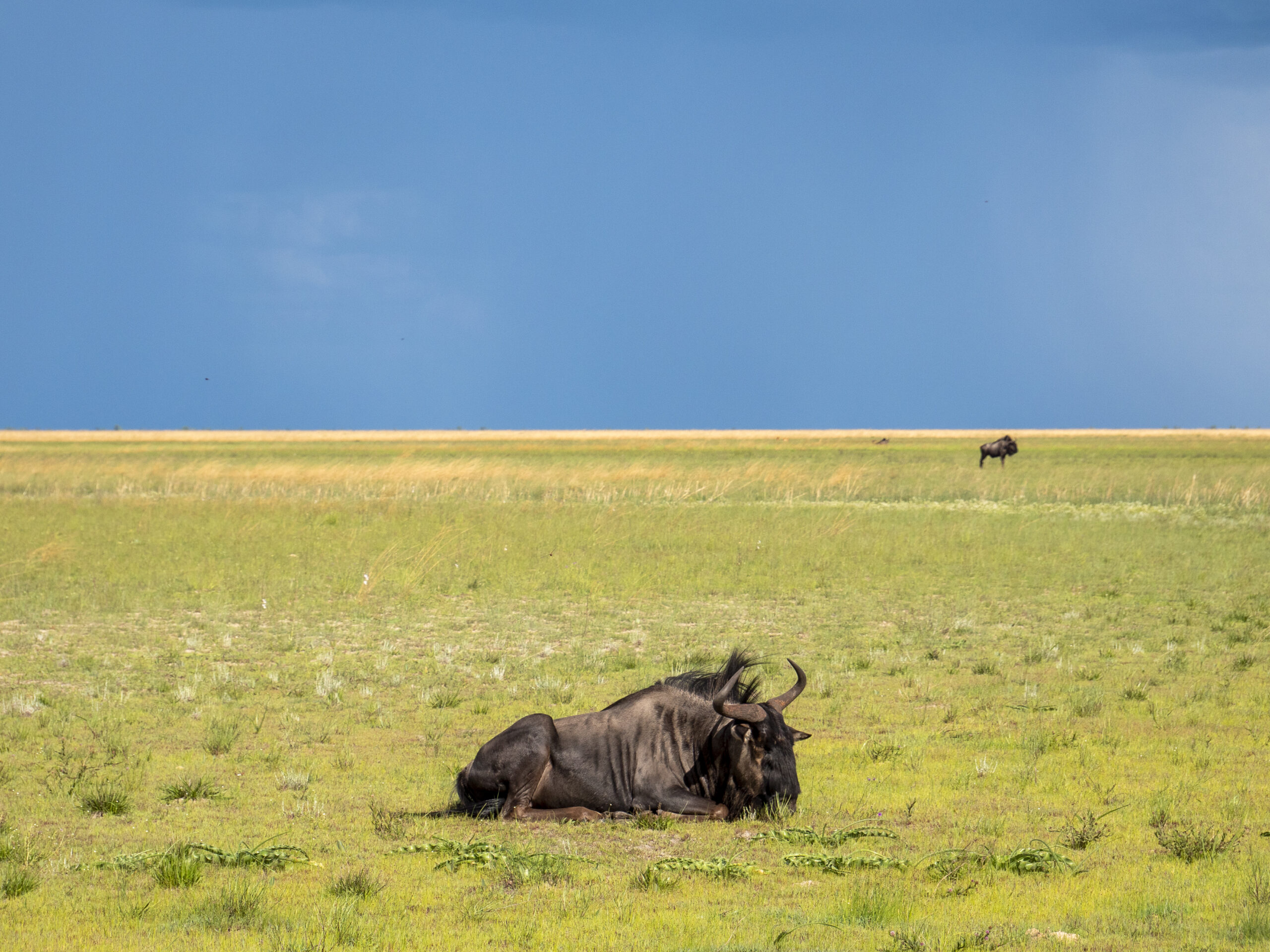


.svg)